Menu


Repeatedly entering the same routing information adds work without improving the schedule. Job templates provide a consistent starting point when several orders share a common production structure, helping planners prepare new jobs with less manual entry.
Combining templates with Excel upload gives manufacturers a practical way to organize production data before bringing it into Just Plan It. The value comes from maintaining accurate routing information and checking that each new job reflects the work required.
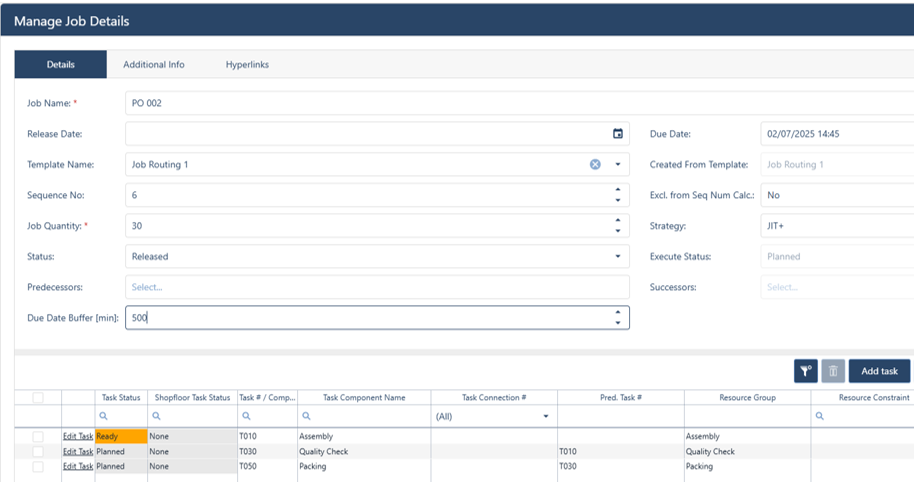
A job template provides a reusable structure for orders that follow a known production sequence. Instead of recreating every task for each order, teams can use that structure as a starting point and maintain the information specific to the job.
For example, several orders may follow the same cutting, machining, and inspection sequence while differing in quantity or processing requirements. A shared template helps keep the underlying routing consistent while allowing those differences to be addressed.
Templates need clear ownership. When production methods change, the responsible person should review the affected templates so that new jobs continue to reflect how work is performed.
IExcel gives teams a familiar environment for preparing and reviewing information before uploading it into Just Plan It. Consistent naming, clearly defined fields, and an agreed file structure make that process easier to repeat.
Before importing, teams should check that the data includes the information required by the current upload specification. Particular attention should be given to template references, task sequences, quantities, processing times, and resource requirements.
A consistent preparation process helps reduce avoidable corrections after the data enters the scheduling system.
A change to a standard routing may be appropriate for future orders without being appropriate for every job already in production. Planners should distinguish between updates to the shared template and adjustments needed for an individual order.
Before changing a template, the team should identify which jobs could be affected and review how the application handles those relationships. Work already scheduled or started deserves particular attention because a routing change may alter resource requirements, timing, or delivery expectations.
Clear rules for maintaining templates help teams preserve consistency while retaining the flexibility needed for individual jobs.
Import mappings connect spreadsheet columns with the corresponding application fields. Maintaining a consistent spreadsheet structure makes these mappings easier to review and reduces unnecessary changes between uploads.
When the source file changes, teams should check the mapping before importing again. A renamed column, a different time unit, or a revised identifier can change how the information is interpreted.
Assigning responsibility for the import structure helps prevent different users from introducing conflicting formats.
A small test upload gives planners an opportunity to check the resulting jobs before applying the process more widely. The review should cover both the imported data and its effect on the schedule.
Tasks should appear in the intended sequence, use the appropriate resources, and reflect realistic quantities and processing times. Any unexpected result should be resolved before further jobs are uploaded.
With maintained templates, consistent import data, and a repeatable validation process, teams can spend less time recreating routing information and more time reviewing capacity and delivery commitments.
 See what Just Plan It can do for your production
A scheduling specialist will walk you through Just Plan It with your specific production environment in mind. Personalized, no pressure, 30 minutes.